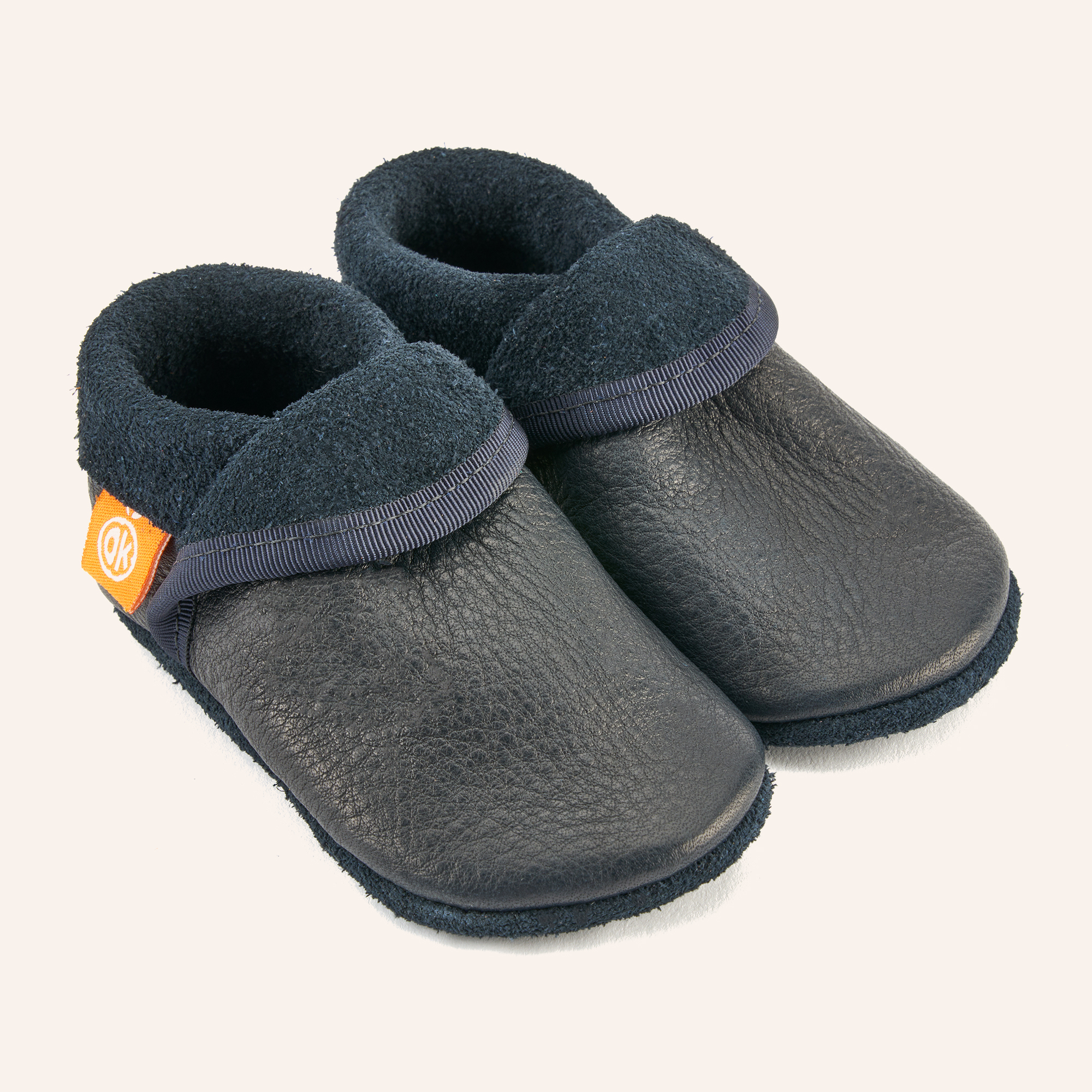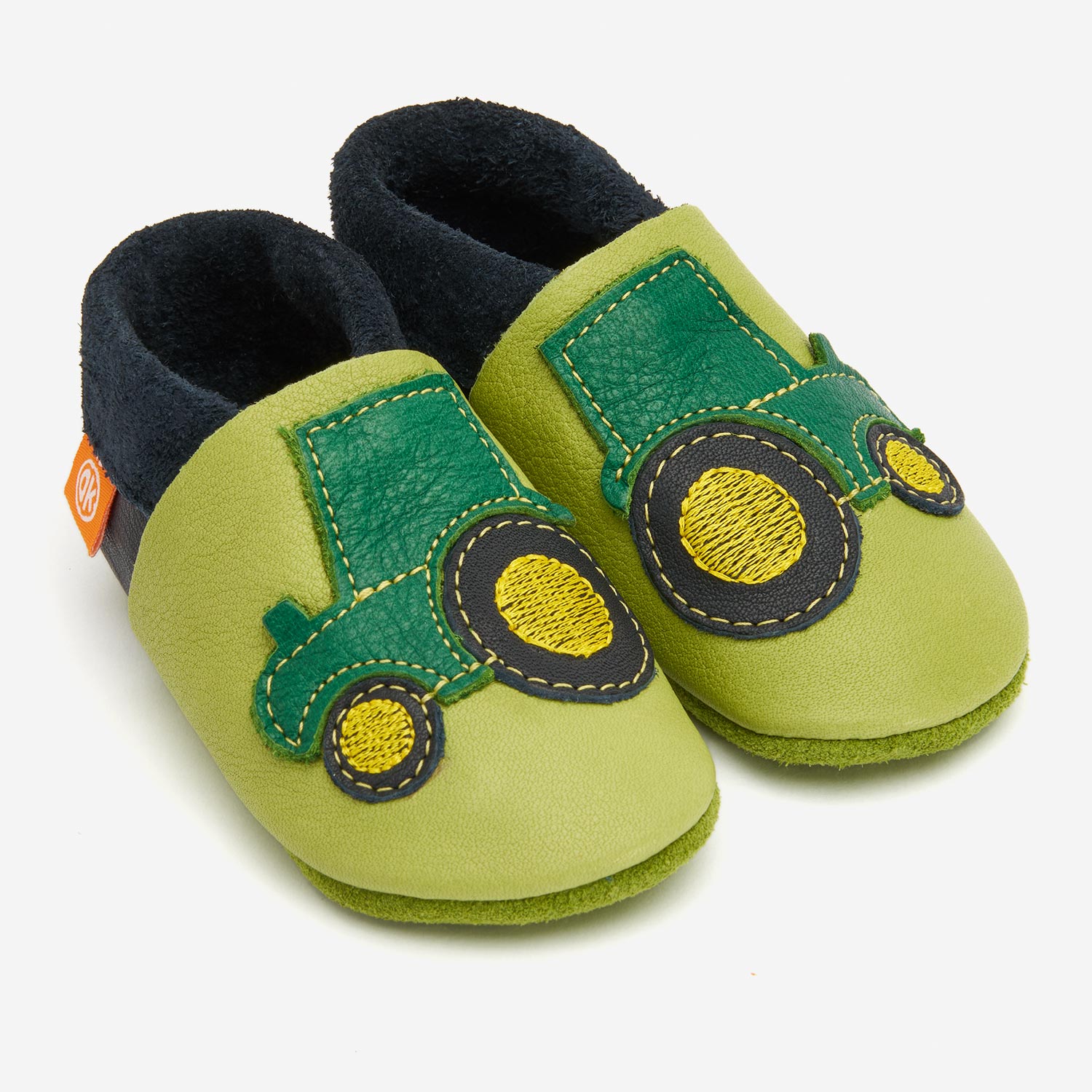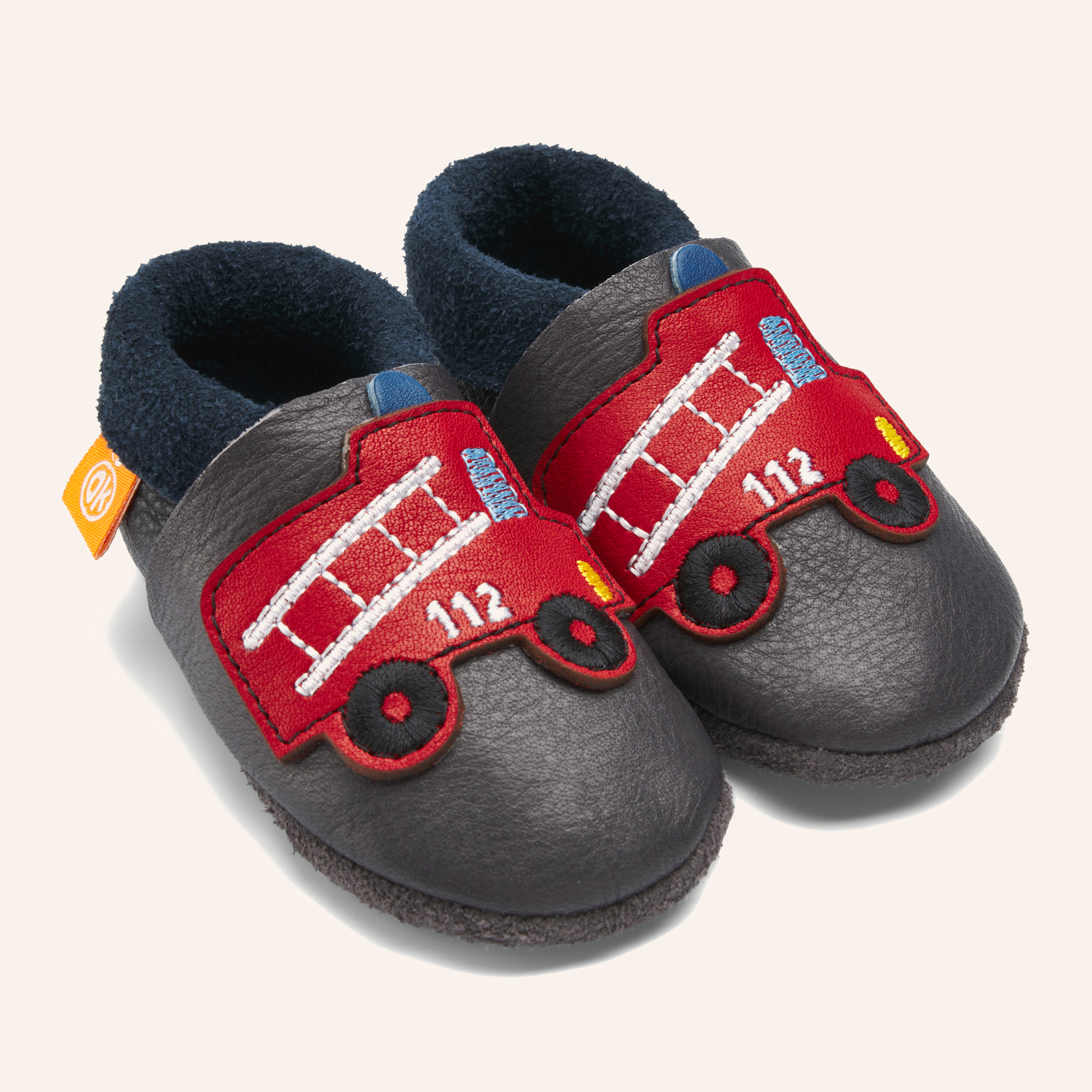

Orangenkinder® soft slippers are available in double sizes, which tend to run closer to the smaller size.
Our soft Orangenkinder®, the Wolli slippers, leather slippers, and our Amigo collection are made here in Bavaria – more precisely in Wilhelmsdorf, Franconia. Here in our own workshop, the Orangenkinder® are designed and hand-punched, sewn, and shipped.
Children need proper sturdy shoes when they can already walk fairly safely outdoors. But also when protection from cold, moisture, dirt, and injury is needed.
Otherwise: let your little ones walk barefoot as much as possible or in leather shoes. These mold to children’s feet and come as close as possible to healthy barefoot walking for kids. Our Orangenkinder fulfill exactly this purpose. Freedom of movement for nimble little feet and warming, breathable protective function at all times. Your Orangenkinder® last best and longest in dry environments – even outdoors.
The fit should be neither too big nor too small – the wrong size can have harmful consequences for growth. Children themselves cannot “tell” how the shoe fits due to less developed pain perception. Check the size of their little feet regularly! Depending on the growth phase, ideally monthly.
Here’s how:
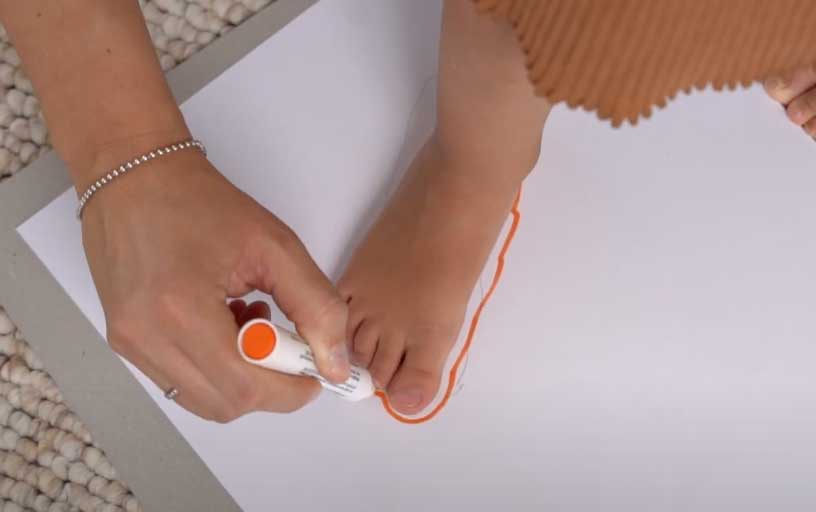
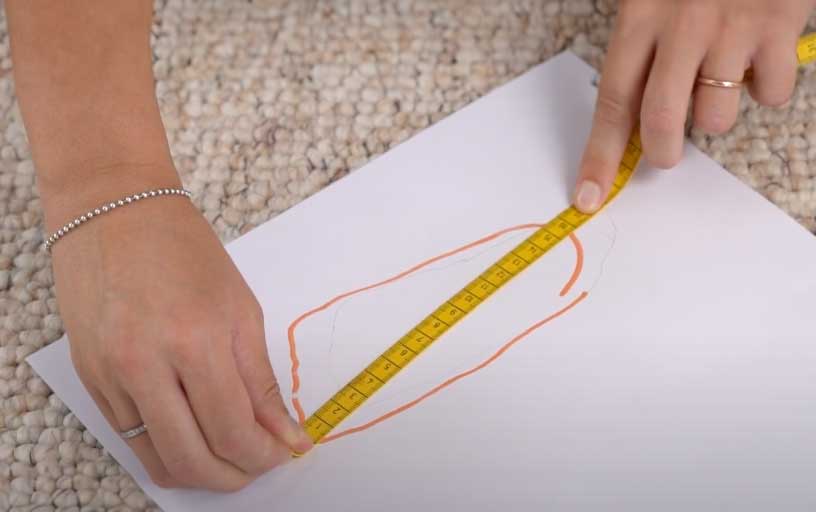
To find the right shoe size, grab a sturdy sheet of paper/cardboard, place your child’s feet on it without socks, and trace the outline of the feet. Your child’s toes should be stretched and they should stand as upright as possible. Measure from the center of the heel to the longest toe in cm.
IMPORTANT! The required size allowance is already calculated into our size chart – please don’t add anything to the measured foot length! (to size chart)
Alternatively, if you’re in a store, mentally add about one centimeter (thumb width) to the longest toe when cutting out the template. Place this in the desired shoe as a test. If the template fits into the shoe without much effort and bending, then you have the first little shoe for your little one’s shortlist.
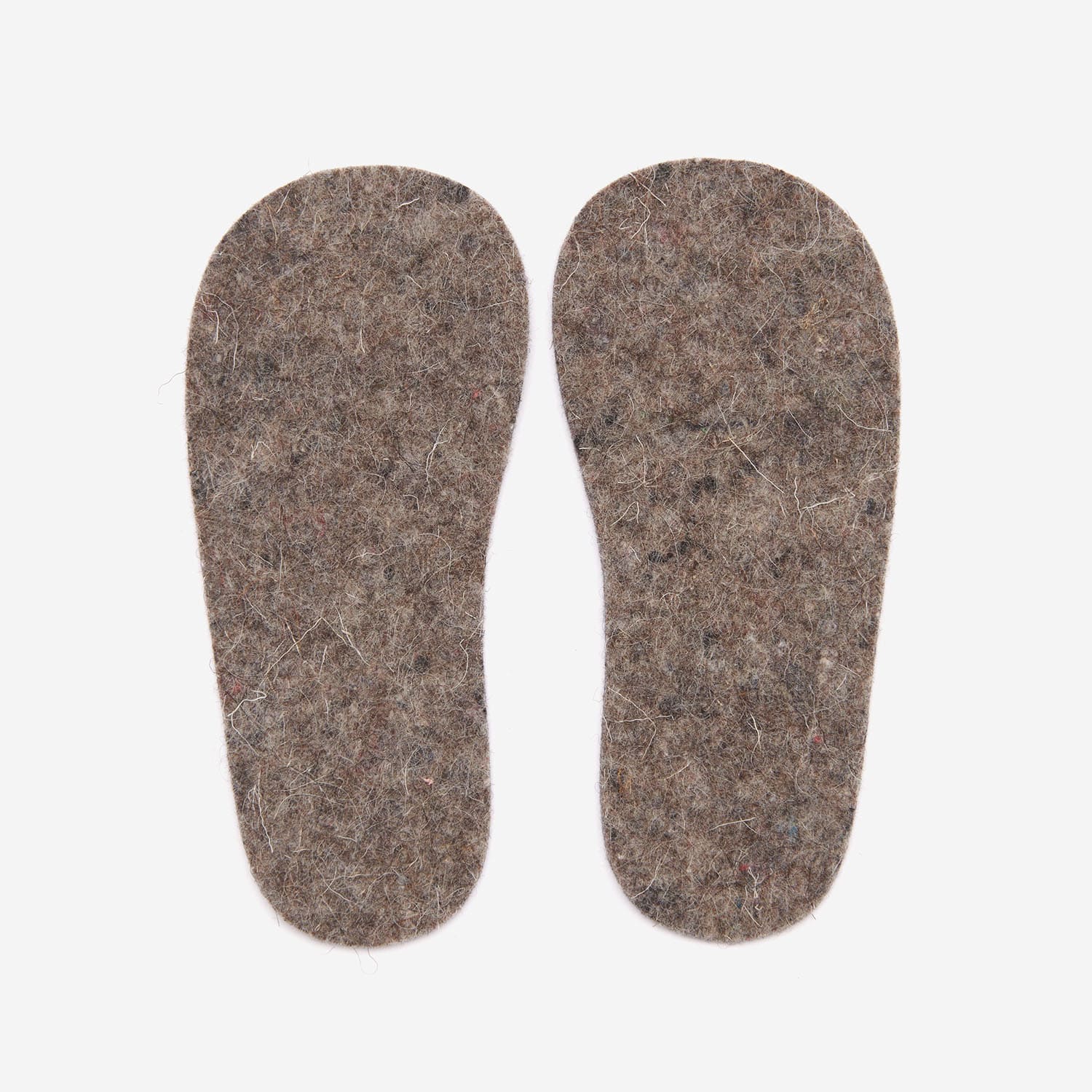
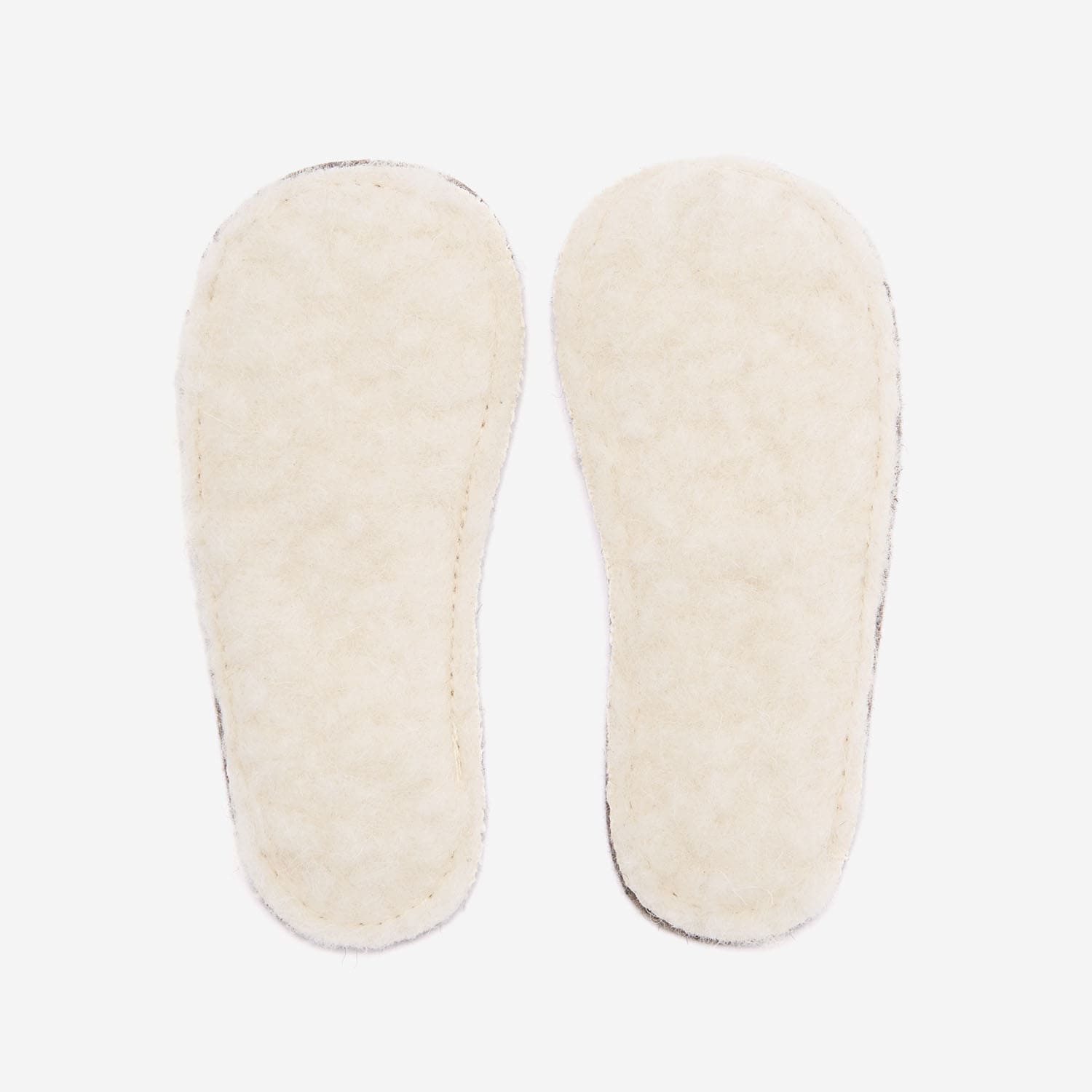
Bonus Orangenkinder tip: The toe imprint on the insole gives you information about the current fit of your Orangenkinder®! Is the toe already at the very front? Time to shop for new Orangenkinder® and move up to the next size!
A sole that’s as soft as possible is recommended here. Flexible and as light as possible. This way you can ensure that the Orangenkinder® don’t hinder or restrict your children’s feet during growth. If the sole is also non-slip, no part of the shoe causes tripping, and the materials are breathable and free of harmful substances – then you’ve met all the criteria for a great children’s shoe. The sole of our Amigos is particularly well suited for this.
Your children’s feet aren’t just miniature versions of mom and dad’s adult feet. Children’s feet are much softer and easily deformable – that’s why it’s extremely important that they can grow freely without barriers and with lots of movement and time. A foot like this grows with you into young adulthood. Feet grow in spurts after they come into the world – the whole system of cartilage and later bones is constantly in a rapid process of growth. Give it space and the time it needs. If you have difficulties choosing the size of your Orangenkinder®, check out our size charts, where we also have some helpful tips for finding the right shoe size.
You can get Orangenkinder naturally here in our online shop or from your local shoe retailer (retailer list).
Occasionally we hold a warehouse sale at our workshop in Wilhelmsdorf, Bavaria. We announce this in our newsletter!
Well, someone’s motivated! We’d be happy to keep you updated on all the news about what’s happening with the Orangenkinder family. Just sign up for our newsletter and you’ll never miss a thing!
Because our shoes are made from the finest organic leather, untreated, free of harmful substances, and uncoated, our Orangenkinder® are also ideal for sensitive little feet! This makes Orangenkinder® particularly skin-friendly. Our main material is vegetable-tanned, chrome-free nappa leather and is strictly tested for compatibility.
The leather we use is processed purely through vegetable tanning agents from harvestable products of renewable plants – this is called tanning. With this we demonstrate our share of responsibility toward future generations – not least you, Orangenkinder. We maintain this through many other strict ecological guidelines and hold it as a very high value of the Orangenkinder® brand.
A little side note: Should an Orangenkinder ever go into its well-deserved retirement, you can put it in the compost – this closes the ecological cycle of the product and its materials.
Many studies have already proven that as early as 4000 years before Christ in ancient Egypt, leather was vegetable-tanned. For many generations it was maintained as a customary processing method for the material in its tradition. Today only about 10% of all leather is tanned this way. In vegetable tanning, the active ingredient tannins is used, which plants actually use for protection against animal attacks.
For Orangenkinder® leather, parts of the valonia oak and tara fruit are used for tanning. Vegetable-tanned leathers are significantly more skin-friendly, more flexible, and more breathable compared to coated leather types.
We’re often asked why we even use leather – after all, animals are killed for it. Wouldn’t vegan leather be better?
You should know that cattle aren’t killed specifically for their hide, but that it’s a byproduct of meat production, which happens everywhere every day anyway and will continue to happen for now, since not all people will suddenly give up meat.
We think if an animal has to die, then it should be fully utilized. It would make little sense and wouldn’t be ethically justifiable to simply throw away the hide. Especially since cowhide is a renewable resource and therefore highly sustainable, just as wood is sustainable and plastic is not, even though trees have to die for it.
Unfortunately, vegan leather is (still) not a full alternative, because these materials mostly consist of plant fibers and petroleum-based plastic components and are generally not fully compostable. As the only truly vegan alternative at the moment, you could consider fabric (we use cotton for our designs and Tyrolean wool fabric for our walk shoes, for example), because that’s also compostable.
We’re constantly looking for alternatives for you – so this is definitely a topic we’ll keep working on….
Your question couldn’t be answered here? Feel free to write to us using the contact form, by email, or reach us by phone.
We’re happy to help you personally with your concern!